You Hold It Together at the Scene. Then the Scene Won’t Let You Go.
You’re trained to run toward what everyone else runs from.
Medical emergencies. Accidents. Violence. The calls nobody at the dinner table could picture.
At the scene, you do the job. Composed, decisive, locked in.
It’s later that it finds you.
Lately you’ve been seeing a lot of faces. The bodies. The carnage.
The expression on a survivor. A child who didn’t make it.
The radio crackles on.
Your chest tightens before the dispatcher finishes the sentence, because part of you is already bracing to walk up on the next horror scene.
This is what repeated exposure does to a nervous system that was never built to absorb this much, this often. Your character was never the problem.
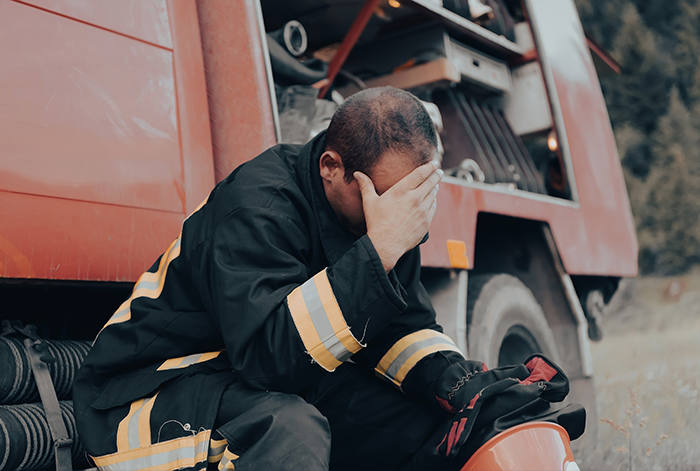
Name the Toll the Job Has Quietly Taken
You came home different.
You told yourself you’d shake it off.
You haven’t.
Sleep comes in pieces.
Your temper has a shorter fuse than it used to.
The photography you loved, the slow weekends with your family, the version of you that was light-hearted: all of it went quiet.
And some part of you decided that asking for help would mean you’re not cut out for the work anymore.
That belief keeps a lot of good responders suffering in silence.
It’s wrong.
And it costs careers.
I Treat the Job the Way the Job Deserves: Directly, Practically, Privately
I’ve spent 38 years helping people carry what the mind couldn’t file on its own.
I move first responders and veterans to the top of my list.
This is practical, results-focused work, not open-ended talk that leaves you where it found you.
You’ll get tools.
You’ll receive simple, effective tools to use between sessions.
Your privacy stays protected.

What You Bring into Session Stays in Session
I use EMDR to help you recover from the scenes that keep ambushing you.
The images lose their charge and stop hijacking your day.
I use Cognitive Behavioral Therapy to interrupt the spiral of intrusive thoughts and sharpen the thinking the job demands.
I use nervous-system calming tools, like EFT tapping and polyvagal techniques, to help you move from fight-or-flight into rest and digest when the radio sets you off.
And I’ll give you one assignment built for people like you: go out and receive pictures instead of taking them.
Notice what moves your heart.
Journal it.
It’s how you find your way back to beauty and back to the people waiting for you at home.
Protect Your Career, and the Person Underneath the Uniform
Tending to your mental fitness is no different from maintaining your gear.
You’d never run a call with equipment you hadn’t checked.
Your mind is equipment, too.
It keeps you sharp, steady, and safe on the worst days.
Many responders find that this work brings back deeper sleep, clearer decisions, and a longer fuse with the people they love.
You said you want peace.
You want the anxiety gone.
You want to feel happy again and enjoy your family.
That’s not too much to ask after you’ve been present in so many people’s worst moments.
Make the Call You’d Tell a Brother or Sister to Make
You don’t have to walk up on one more scene alone in your own head.
Let’s talk for 15 minutes, free, and see whether this is the right fit.
I work with first responders across Florida by telehealth.
You can meet with me from anywhere in the state.
Call me today at (386) 473-3290.
